
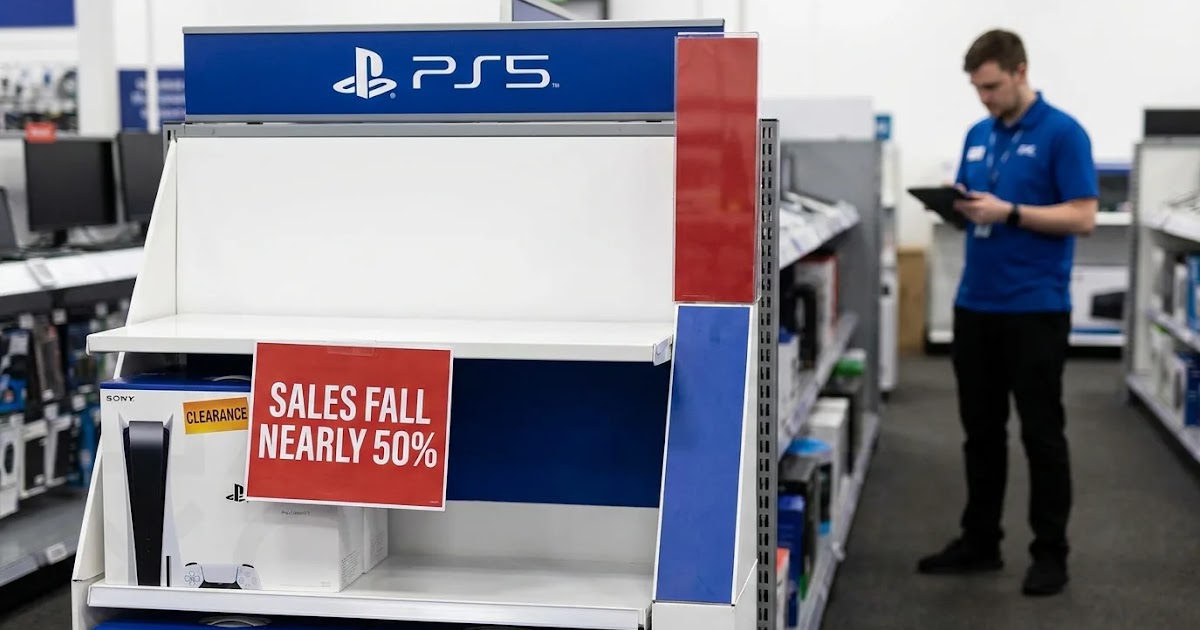
The PlayStation 5 is getting into a brand new part of its lifecycle, and Sony’s newest monetary outcomes reveal each the challenges and ambitions shaping the corporate’s future. Whereas PS5 {hardware} gross sales have dropped sharply in comparison with the earlier 12 months, Sony executives are presenting a long-term imaginative and prescient centered on synthetic intelligence, superior animation programs, and manufacturing effectivity instruments designed to rework how video games are made.
Sony’s earnings briefing painted an image of a gaming large navigating two very completely different realities on the similar time. On one aspect, the PS5 is experiencing the pure slowdown that always comes with getting old console {hardware} and financial uncertainty. On the opposite, Sony believes AI-powered applied sciences might redefine the way forward for recreation creation, serving to builders produce richer experiences whereas decreasing technical bottlenecks and repetitive workloads.
The corporate’s technique displays a broader shift going down throughout the leisure {industry}, the place AI is not seen as an experimental idea however more and more as a core manufacturing instrument. From facial animation programs to automated high quality assurance and next-generation hair rendering expertise, Sony seems decided to place PlayStation studios on the forefront of this transformation.
PS5 {Hardware} Gross sales Proceed to Gradual
In response to Sony’s newest monetary report, the corporate bought roughly 1.5 million PS5 consoles throughout its fiscal fourth quarter. That represents a dramatic 46% decline in comparison with the two.8 million models bought throughout the identical interval one 12 months earlier.
Regardless of the slowdown, the PS5 stays one of the vital profitable gaming consoles in trendy historical past. Since its launch in 2020, Sony has bought roughly 93.7 million models worldwide, inserting the system inside attain of a few of PlayStation’s most iconic {hardware} milestones.
Nonetheless, the most recent numbers spotlight a big transition level for the console.
The PS5 is now in its sixth 12 months in the marketplace, a stage the place most gaming programs historically start experiencing weaker {hardware} demand. Early adopters have already bought the platform, and plenty of shoppers have gotten more and more selective about spending amid rising international prices of residing.
Sony additionally faces one other problem: the PS5 is at present costlier than it was at launch.
Since 2020, Sony has elevated pricing for a number of PS5 fashions and areas, pushing the price of entry increased for a lot of shoppers. Financial instability, inflation, and foreign money fluctuations have positioned extra stress on each producers and consumers. Through the earnings presentation, Sony particularly referenced “continued pressures in the global economic landscape” as a key issue behind the decline.
The corporate’s feedback counsel that broader macroeconomic situations stay deeply linked to gaming {industry} efficiency. Even main leisure merchandise just like the PS5 aren’t resistant to rising prices, provide chain instability, and cautious shopper spending habits.
The International Chip and Reminiscence Disaster Nonetheless Issues
Though the worst part of the pandemic-era semiconductor scarcity has handed, Sony indicated that component-related challenges proceed to have an effect on operations and future planning.
The gaming {industry} stays closely depending on superior chips, reminiscence programs, and manufacturing capability which might be additionally important for smartphones, AI servers, graphics {hardware}, and information facilities. Competitors for these assets has intensified dramatically over the previous a number of years.
Synthetic intelligence is paradoxically a part of the issue.
As expertise corporations race to construct AI infrastructure, demand for high-performance chips and reminiscence elements has surged throughout a number of sectors. This creates stress not just for cloud suppliers and AI startups, but additionally for gaming corporations that depend on comparable manufacturing ecosystems.
Sony acknowledged that AI-related demand is contributing to ongoing constraints within the provide chain, affecting long-term planning for PlayStation {hardware} and future initiatives.
These shortages might also clarify why Sony stays cautious about discussing the PlayStation 6 intimately. Through the briefing, executives indicated that next-generation console planning remains to be being influenced by international element availability and manufacturing uncertainty.
That doesn’t essentially imply the PS6 is delayed, however it does counsel Sony is approaching the following {hardware} transition rigorously.
Sony’s Rising Deal with Synthetic Intelligence
Whereas the {hardware} numbers dominated headlines, one of the vital revealing facets of Sony’s briefing concerned the corporate’s rising dedication to AI-assisted recreation improvement.
Sony Group president and CEO Hiroki Totoki described AI as a “powerful tool” able to bettering effectivity and supporting artistic groups. On the similar time, he emphasised that Sony doesn’t see AI as a substitute for human creators.
This distinction is turning into more and more vital throughout leisure industries.
Writers, artists, animators, actors, and builders have expressed issues about automation probably changing artistic jobs. Sony seems wanting to place its technique in another way, framing AI as an enhancement system designed to take away repetitive technical work fairly than eradicate creative roles.
For PlayStation Studios particularly, Sony Interactive Leisure president and CEO Hideaki Nishino defined that first-party groups are already integrating AI programs into a number of levels of recreation manufacturing.
In response to Nishino, these applied sciences are getting used to automate mundane workflows, speed up high quality assurance processes, enhance productiveness, and help with complicated animation duties.
The corporate’s feedback reveal that AI implementation inside PlayStation Studios is not theoretical. These instruments are actively being utilized in actual improvement environments in the present day.
AI-Powered Animation Is Changing into a Main Precedence
Probably the most notable applied sciences mentioned in the course of the earnings presentation was a system referred to as Mockingbird, which Sony says can generate facial animations utilizing motion-capture information.
Facial animation has traditionally been one of the vital labor-intensive elements of AAA recreation improvement. Excessive-quality cinematic expressions require intensive guide changes, cleanup work, and animation refinement by expert artists.
Sony claims Mockingbird dramatically accelerates this course of.
In response to Nishino, animation duties that beforehand required hours of guide work can now be accomplished “in a fraction of a second” utilizing the AI-assisted system.
This sort of workflow optimization might have huge implications for contemporary recreation manufacturing.
As AAA video games grow to be extra cinematic and visually detailed, improvement timelines have expanded considerably. Many blockbuster video games now require 5 to seven years of manufacturing and contain budgets rivaling main Hollywood movies.
Decreasing repetitive technical labor might assist studios allocate extra assets towards gameplay programs, world design, storytelling, and artistic experimentation.
Sony emphasised precisely this level in the course of the presentation.
Slightly than changing artists, the corporate argues that AI instruments permit builders to spend much less time on tedious guide duties and extra time specializing in the emotional and artistic facets of recreation design.
Naughty Canine and San Diego Studio Already Use These Instruments
Sony confirmed that a number of main PlayStation Studios groups are already utilizing AI-enhanced improvement programs, together with Naughty Canine and San Diego Studio.
That is significantly vital as a result of Naughty Canine is broadly thought of one in every of Sony’s flagship improvement studios. Identified for visually superior titles similar to The Final of Us and Uncharted, the studio has lengthy been acknowledged for pushing cinematic storytelling and character animation to industry-leading ranges.
If Naughty Canine is actively implementing AI-assisted workflows, it indicators that Sony views these applied sciences as central to the way forward for premium recreation manufacturing.
San Diego Studio, identified primarily for sports activities franchises similar to MLB The Present, can also be integrating these programs. Sports activities video games typically require huge animation libraries, lifelike facial fashions, and fixed yearly iteration, making them splendid candidates for automation and effectivity enhancements.
Using AI throughout completely different genres suggests Sony intends to standardize these instruments throughout a number of inside groups fairly than restrict them to experimental initiatives.
Sony’s New AI Hair Expertise Might Change Character Creation
Among the many most intriguing applied sciences talked about in the course of the briefing was Sony’s AI-powered hair animation and modeling system.
Hair simulation has historically been one of the vital technically troublesome facets of real-time graphics. Rendering lifelike hair requires huge computational assets and intensive guide artist enter. Advanced hairstyles can considerably enhance manufacturing time, particularly when changing real-world references into usable 3D belongings.
Sony says its new system can analyze video footage of hair and routinely convert it into detailed 3D fashions.
This course of dramatically reduces the guide effort beforehand required from artists and technical groups.
Though it could sound like a comparatively area of interest development, hair rendering performs a serious position in trendy visible realism. Extremely detailed character fashions at the moment are anticipated in AAA video games, significantly in story-driven cinematic experiences.
Extra environment friendly hair era might enhance each realism and manufacturing pace concurrently.
It additionally demonstrates how AI is being built-in into very specialised facets of recreation improvement fairly than merely functioning as a broad automation instrument.
As an alternative of changing creativity, these programs seem designed to unravel extremely technical manufacturing issues.
The Business-Vast AI Debate Continues
Sony’s feedback arrive throughout a broader {industry} debate surrounding AI adoption in gaming and leisure.
Many expertise corporations are aggressively investing in generative AI programs able to producing artwork, dialogue, code, music, and animation. Supporters argue these instruments can enhance effectivity and decrease manufacturing prices, whereas critics fear about job displacement, moral issues, and the potential erosion of artistic authenticity.
Sony’s messaging seems rigorously calibrated to handle these fears.
Nishino repeatedly emphasised that human creators stay central to PlayStation’s philosophy. In response to Sony, the “vision, design, and emotional impact” of video games will proceed to return from artists, performers, writers, and builders fairly than algorithms.
This framing displays an vital strategic determination.
Shoppers are more and more delicate to how AI is utilized in artistic industries. Whereas gamers might welcome quicker improvement cycles and improved visuals, they might additionally react negatively in the event that they consider automation is changing creative expertise solely.
Sony subsequently appears centered on presenting AI as a supportive infrastructure layer fairly than a artistic substitute.
Whether or not the broader {industry} follows that philosophy stays to be seen.
AAA Improvement Prices Are Changing into Unsustainable
Sony’s push towards AI effectivity additionally highlights a rising downside dealing with the gaming {industry}: trendy AAA recreation improvement is turning into terribly costly.
Excessive-end video games now require huge groups, superior expertise pipelines, motion-capture studios, orchestral soundtracks, huge advertising and marketing budgets, and years of manufacturing.
As graphical expectations proceed to rise, so do prices.
Some blockbuster titles reportedly exceed a whole lot of hundreds of thousands of {dollars} in mixed improvement and advertising and marketing bills. This creates vital monetary stress even for big publishers like Sony.
AI-assisted manufacturing instruments might assist scale back a few of these burdens.
Automating repetitive duties similar to animation cleanup, high quality assurance testing, and asset conversion might permit studios to provide content material extra effectively with out sacrificing high quality.
Sony’s statements counsel the corporate sees AI not merely as a technological development, however as a sensible necessity for sustaining trendy recreation improvement at scale.
PS5 Nonetheless Has Sturdy Software program Momentum
Though {hardware} gross sales have slowed, PlayStation’s broader ecosystem stays extremely influential.
Sony continues to profit from sturdy first-party franchises, subscription providers, digital gross sales, and a longtime international participant base. The PS5 nonetheless maintains a dominant place in lots of main gaming markets, significantly amongst gamers centered on cinematic single-player experiences.
The corporate’s long-term success might rely much less on {hardware} gross sales alone and extra on how successfully it monetizes its ecosystem.
Digital storefront purchases, on-line subscriptions, cloud gaming initiatives, live-service titles, and multimedia variations are all turning into more and more vital income streams.
Sony’s leisure technique now extends far past conventional console gross sales.
Franchises similar to The Final of Us have efficiently expanded into tv variations, whereas PlayStation Productions continues exploring cross-media alternatives.
AI-driven efficiencies might strengthen this ecosystem additional by serving to studios create content material quicker and extra persistently.
Bungie Acquisition Nonetheless Creates Monetary Challenges
Sony additionally acknowledged that its acquisition of Bungie continues to create monetary difficulties.
The corporate bought Bungie, the studio behind Future, in a multibillion-dollar deal aimed toward accelerating Sony’s growth into live-service gaming. Nevertheless, integrating Bungie into Sony’s long-term technique has confirmed extra difficult than anticipated.
The acquisition has reportedly generated monetary pressure and operational challenges, particularly because the live-service market turns into more and more aggressive.
A number of high-profile live-service initiatives throughout the gaming {industry} have struggled lately, and participant engagement patterns stay troublesome to foretell.
Sony has already canceled or reevaluated a number of live-service initiatives internally, signaling a extra cautious strategy transferring ahead.
The corporate now seems to be balancing two competing targets: sustaining its repute for premium single-player experiences whereas additionally pursuing recurring income alternatives via on-line multiplayer ecosystems.
AI instruments might ultimately assist scale back improvement prices in each areas.
What This Means for the Way forward for PlayStation
Sony’s newest earnings briefing in the end reveals an organization in transition.
The explosive launch interval of the PS5 period is ending. {Hardware} progress is slowing, financial situations stay unstable, and competitors throughout the expertise sector is intensifying.
On the similar time, Sony is laying the groundwork for what it believes will outline the following era of leisure manufacturing.
Synthetic intelligence is quickly turning into embedded in each stage of recreation improvement, from animation and modeling to testing and manufacturing workflows. Sony needs PlayStation Studios to guide that transformation whereas preserving the human creativity that defines its most profitable video games.
This balancing act might form the long run id of PlayStation itself.
If Sony succeeds, AI might assist builders create bigger worlds, extra lifelike characters, and extra formidable experiences with out extending manufacturing cycles indefinitely. Gamers may gain advantage from richer video games arriving extra persistently, whereas studios achieve instruments that scale back technical overhead.
Nevertheless, the transition additionally carries dangers.
The gaming group stays skeptical about some types of AI integration, significantly generative programs that will have an effect on creative originality or employment alternatives. Sony will seemingly want to keep up transparency about how these applied sciences are used and guarantee builders stay visibly central to the artistic course of.
For now, the corporate seems centered on a practical strategy.
Sony is just not presenting AI as a substitute for recreation creators. As an alternative, it’s positioning these programs as superior manufacturing assistants able to accelerating technical duties whereas leaving creative path in human palms.
Whether or not that imaginative and prescient in the end succeeds might decide not solely the way forward for PlayStation, but additionally the broader evolution of AAA recreation improvement over the following decade.